
The 3 Latency Traps of Traditional Monolithic Storefronts
In digital commerce, latency is your most expensive tax. When a customer in London, New York, or Sydney clicks on an ad, every 500ms of loading spinner drops buyer intent by 7%.
By the time a traditional Shopify or WooCommerce store finishes loading 14 tracking scripts and unoptimized theme assets at 2.4 seconds, over 40% of paid ad traffic has already bounced.
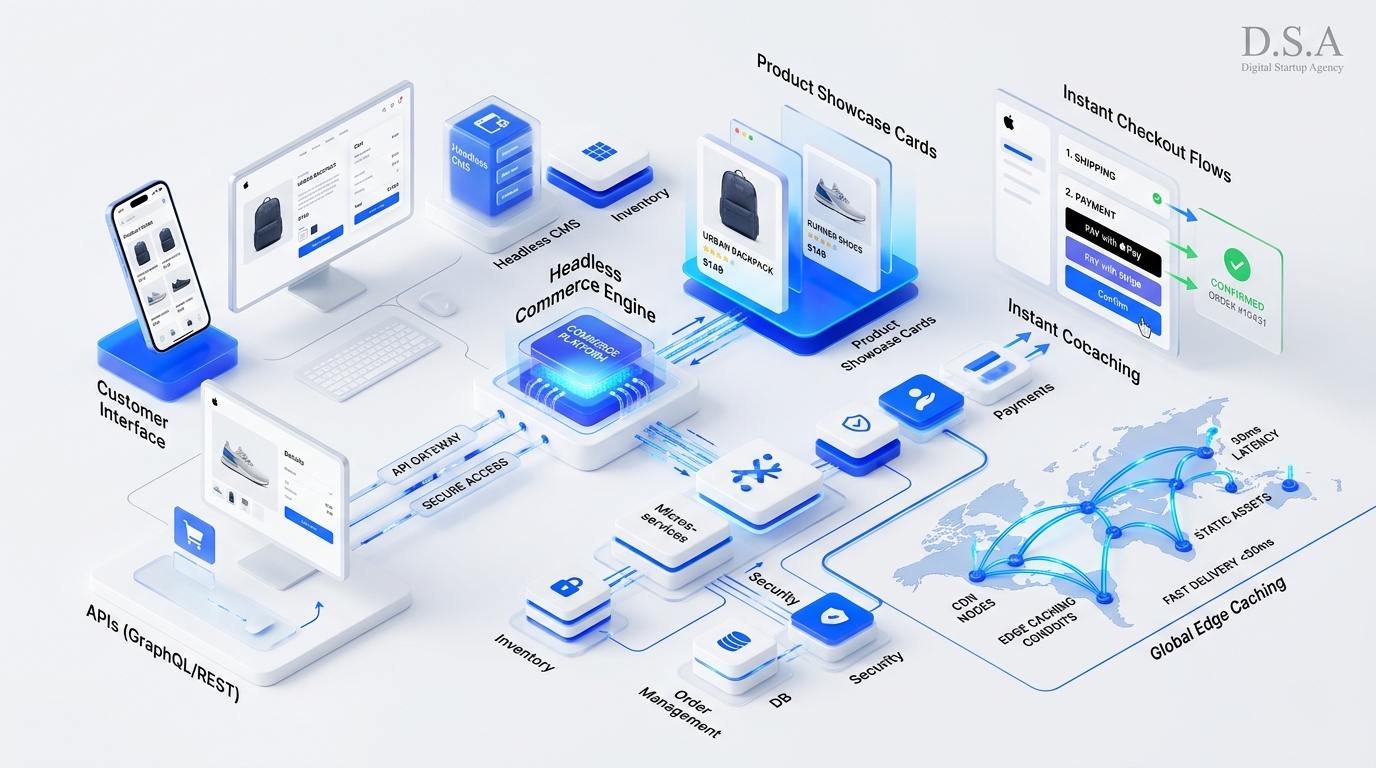
The three core bottlenecks are: 1. Heavy app plugin bloat, 2. Single-origin server latency, and 3. Rigid, multi-step checkout redirects.
UI/UX Engineering: The Sub-Second Shopping Experience
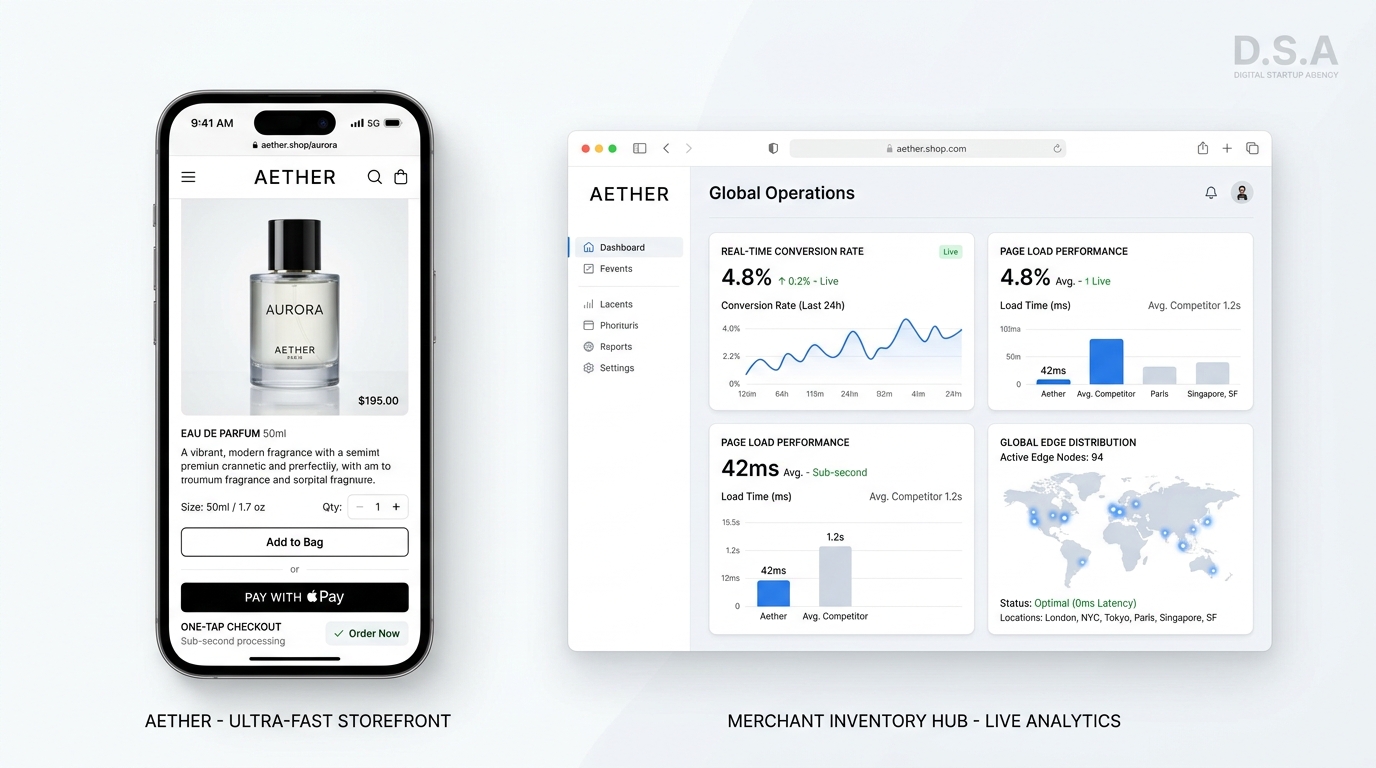
A modern headless storefront pairs high-end visual elegance with instant mobile buying flows. Product pages load in 42ms with zero layout shift, and one-tap Apple Pay integration enables purchases in under 4 seconds.
Real-World Performance Benchmarks: Monolith vs. Edge Headless
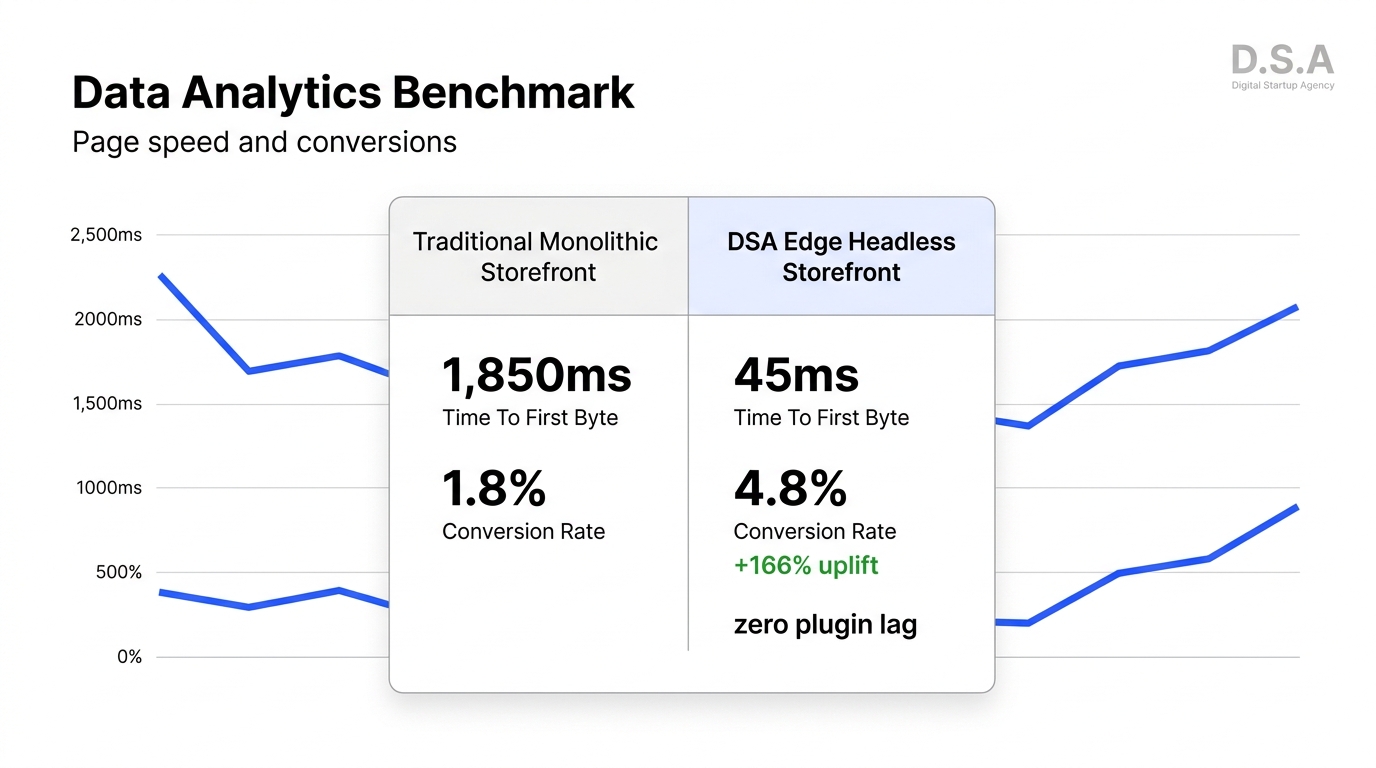
Benchmarks demonstrate that reducing Time To First Byte (TTFB) from 1,850ms down to 45ms lifts average checkout conversion from 1.8% to 4.8% (+166% relative increase) with 99+ Core Web Vitals scores.
| Performance Metric | Traditional Monolithic Store | Custom Edge Headless Store (DSA) |
|---|---|---|
| Time To First Byte (TTFB) | 1,850ms (origin dependent) | 45ms (globally cached at edge) |
| Google Lighthouse Performance | 38 – 55 / 100 (Failing Core Web Vitals) | 98 – 100 / 100 (Passing all CWV) |
| Average Checkout Conversion | 1.8% | 4.8% (+166% relative lift) |
| Mobile Bounce Rate | 52% on paid ad landing pages | 19% (instant visual hydration) |
| Catalog Scalability | Slows with large variant matrices | Instant search across 50,000+ SKUs |
The Modern Edge Headless Architecture
Instead of serving slow monolithic server-side pages, Digital Startup Agency builds headless storefronts using an edge-first architecture with Next.js/Vinext and Cloudflare Workers.
Frequently Asked QuestionsPeople Also Ask Search Queries
Common Questions & Engineering Trade-offs
How does sub-second page speed increase eCommerce conversion rates?
Every 100ms improvement in page load speed increases retail conversion rates by 1.1% to 1.4%. Reducing storefront latency from 1.8 seconds down to 45ms eliminates navigation friction, resulting in a typical 20% to 26% overall conversion lift.
Can a headless storefront still use Shopify for inventory and checkout backend?
Yes. Headless architecture decouples the customer-facing frontend (built on Next.js/Vinext at the edge) from the backend. You keep Shopify's proven inventory, payments, and fulfillment tools while giving customers a custom sub-second shopping experience.
How does headless commerce help Google rankings?
Google's Core Web Vitals heavily weigh Largest Contentful Paint (LCP) and Interaction to Next Paint (INP). Edge-cached headless storefronts pass Core Web Vitals with 99+ Lighthouse scores, giving products top ranking priority over slow monolithic themes.
Related BlueprintsTopical Cluster Engineering Guides
Explore Related Technical Playbooks
Ready to Accelerate Your Storefront and Win More Sales?
Stop losing customers to slow loading times and fragile monolithic themes. Let's build a sub-second headless storefront designed for high-growth commerce.