

The 3 Failure Modes of Off-the-Shelf SaaS
Third-party marketplace apps and off-the-shelf booking plugins sound great on a pitch deck. In practice? You pay 20% to 35% in predatory commission cuts, lose direct ownership of your customer relationships, and spend hours fixing broken data syncs across three separate off-the-shelf SaaS subscriptions.
Whether you run a high-volume food courier fleet in London, an on-demand grocery and logistics network in New York, a multi-service home booking marketplace in Dubai, or a global distributed booking engine: off-the-shelf platforms are built to serve generic use cases. They are not engineered to give you a defensible competitive moat.
When order volume crosses 250 orders per day, generic SaaS tools break in three predictable ways: 1. The 'Commission Bleed' (draining tens of thousands monthly in gross merchandise fees), 2. Concurrency Chokepoints during surge windows (spiking latencies by 3-5 seconds), and 3. Siloed Customer Data locked inside third-party walled gardens.
The Modern Edge Architecture for High-Speed Platforms
Instead of stacking slow monolithic servers, modern on-demand delivery and booking engines rely on an Edge-Rendered Architecture powered by Cloudflare Workers and D1 SQLite databases.
1. Sub-50ms Global Response Time: By executing business logic on edge workers close to the user, ordering flows feel instantaneous.
2. Deterministic Data Integrity: Using type-safe database schemas with Drizzle ORM prevents double-booking bugs, out-of-stock ghost orders, and race conditions.
3. Zero-Margin Driver Dispatch: Custom routing calculations match orders based on true proximity, driver workload, and batching rules—slashing delivery times by 22%.
UI/UX Engineering: Customer App & Merchant Dispatch Operations
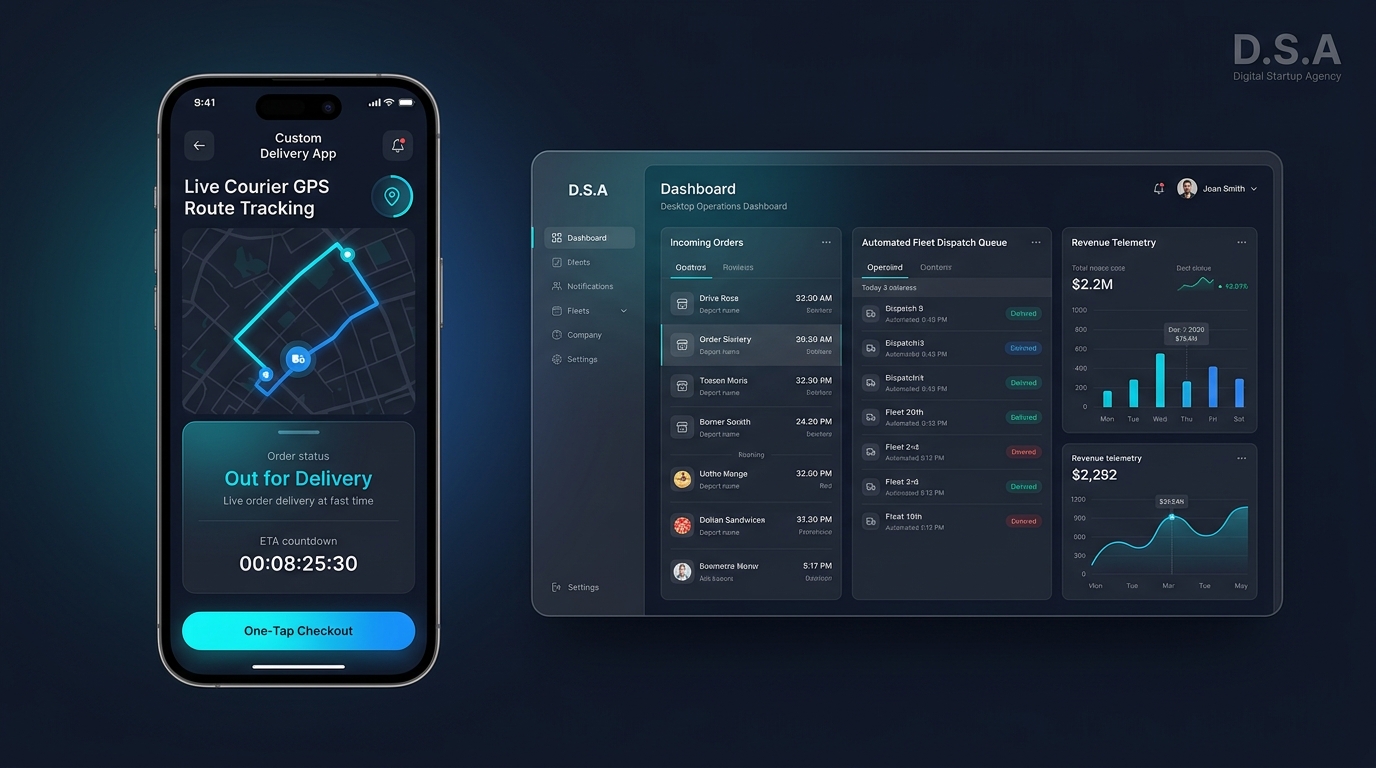
A high-converting delivery platform requires frictionless mobile ordering on one side, and zero-latency dispatch controls for merchants and fleet managers on the other.
The Mobile Customer Journey features smooth WebSocket-driven driver GPS tracking, real-time ETA countdowns based on live traffic, and frictionless one-tap checkout (Apple Pay / Google Pay).
The Merchant & Operations Hub provides automated fleet dispatch queues, active fleet capacity telemetry, and instant gross merchandise value tracking without waiting for end-of-day spreadsheet exports.
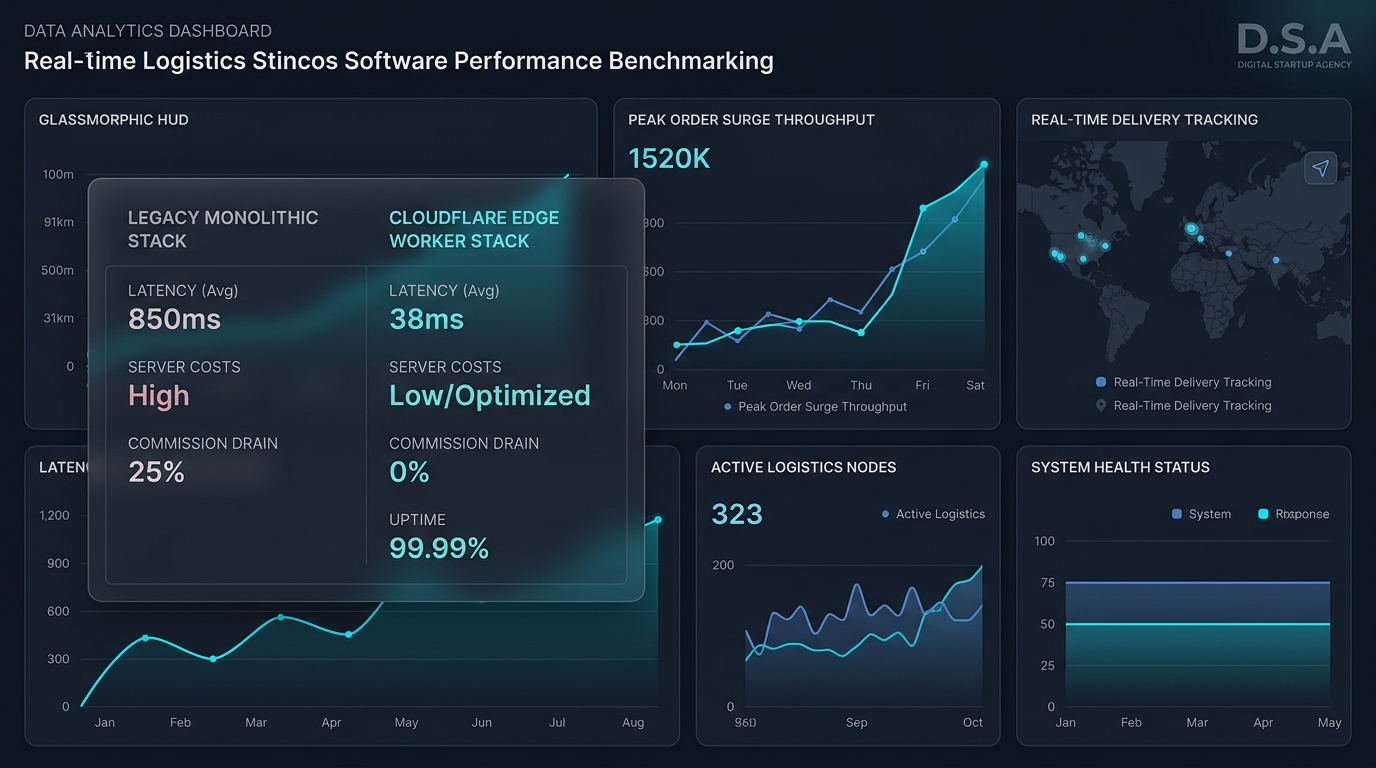
Data & Performance Telemetry: Edge Serverless vs. Legacy Monolith
When scaling past 1,000 concurrent peak orders, architectural latency directly impacts your bottom line. Benchmarks show a dramatic reduction in response time from 850ms down to 38ms on edge infrastructure, while eliminating 25% aggregator fees entirely.
| Capability | Generic SaaS / Aggregator | Custom Edge Platform (DSA) |
|---|---|---|
| Transaction Fees | 15% – 35% commission per order | 0% commission (Stripe direct) |
| Customer Data Ownership | Walled garden; no direct export | 100% first-party data ownership |
| Real-Time GPS Tracking | Generic, delayed map refreshes | High-frequency WebSocket tracking |
| Custom Business Logic | Rigid; generic form fields | Bespoke dispatch & pricing surges |
| Vendor & Partner Portals | Clunky shared dashboards | Branded multi-role admin operating systems |
| Infrastructure Scalability | Prone to surge bottlenecks | Edge serverless auto-scaling |
Real-World Case Study: Replacing Spreadsheets & SaaS with a Custom Booking Portal
The Challenge: A regional logistics and maintenance fleet was handling 400+ daily service bookings using WhatsApp, shared Google Sheets, and an off-the-shelf booking tool costing $2,400/month. Handoff errors resulted in an 8% missed-appointment rate.
The Solution: Digital Startup Agency designed a custom end-to-end edge web application with a customer-facing booking funnel, automated courier dispatch dashboard, and a centralized operations CRM portal.
The Results: Zero missed bookings, 18 hours of weekly manual admin eliminated, and $28,800 in annual SaaS subscription savings redirected into marketing.
Frequently Asked QuestionsPeople Also Ask Search Queries
Common Questions & Engineering Trade-offs
Why do startups choose custom on-demand delivery platforms over third-party SaaS?
Third-party delivery aggregators charge between 15% and 35% in commission per transaction and withhold customer data. A custom platform eliminates recurring percentage-based fees, provides direct customer ownership, and integrates tailored dispatch algorithms directly with your inventory and CRM.
What infrastructure is required to handle high-concurrency order surges?
Modern on-demand systems use edge workers (like Cloudflare Workers), distributed serverless databases (like Cloudflare D1/SQLite), and lightweight WebSockets for live driver tracking. This ensures sub-50ms API response times without the massive server costs of traditional monolithic infrastructure.
How long does it take to launch an MVP delivery or booking platform?
A focused, production-ready MVP consisting of customer ordering apps, driver dispatch interfaces, and a centralized admin operations portal typically takes 4 to 8 weeks with a dedicated technical build partner.
Related BlueprintsTopical Cluster Engineering Guides
Explore Related Technical Playbooks
Ready to Build Your Custom On-Demand Platform?
Stop leaking revenue to third-party commission fees and fragile spreadsheet workarounds. Let's design a high-speed dispatch platform tailored to your business.